Hafod | The Fat of the Land.

December 05, 2025 5 min read

Hafod | The Fat of the Land.

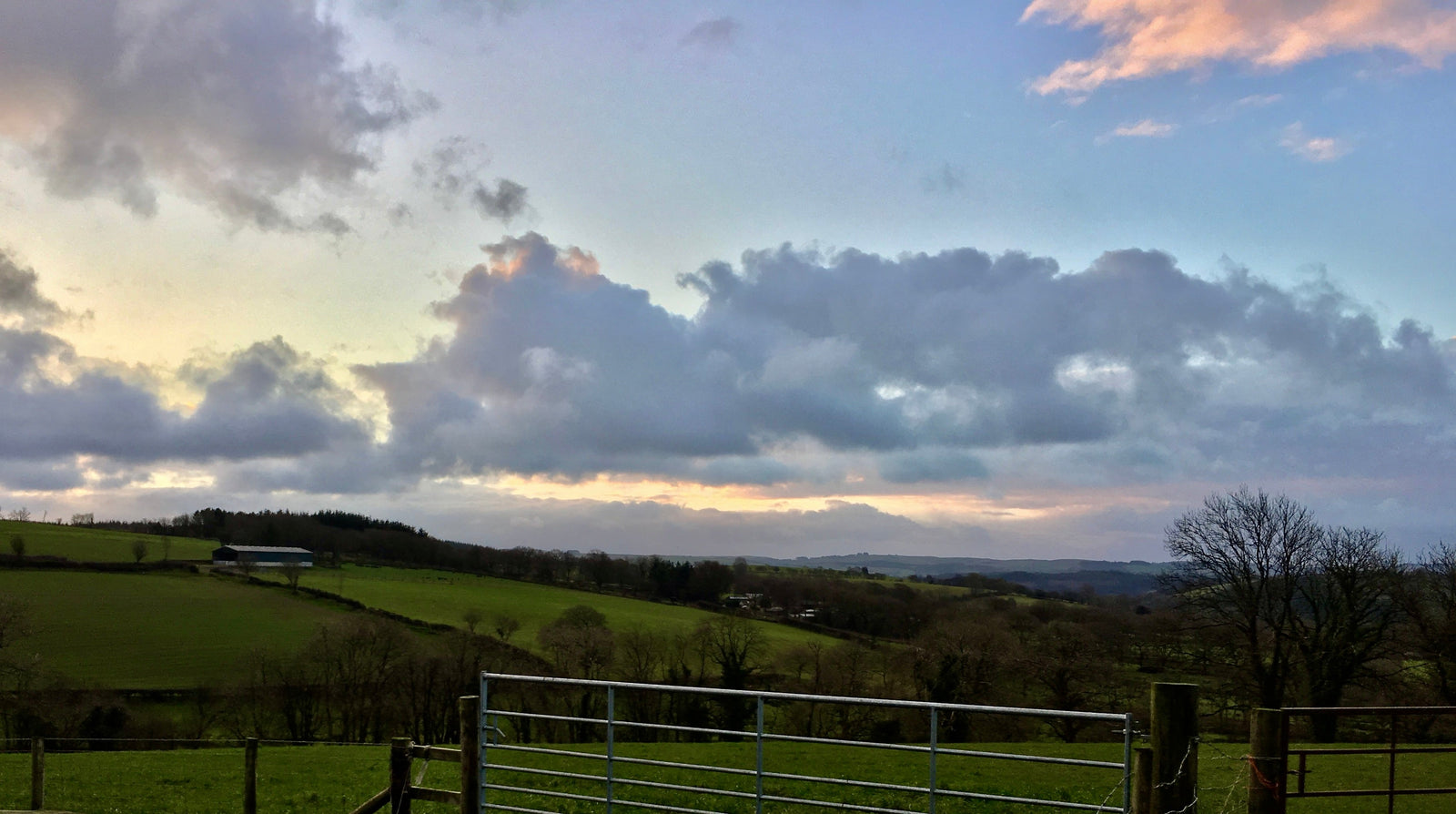
There is an atmosphere at Bwlchwernen Fawr, the farm where Hafod is made.  It feels full of life. 

You notice this before you can work out why.  Then you remember, the farm has been organic since 1973 and in all that time, the soil health, insect life and bird life has thrived.  It is alive with natural noises and sights and the feeling you get from just standing in the fields, reminds you that the farmers are fully invested in holistic and respectful management of their land.

Those farmers, Patrick Holden and his wife Becky, are unconventional thinkers.  They question the received wisdom in the farming community and find their own ways to do things, always with the greatest respect for the health of the land, crops, animals and the team of staff who work with them.  That Patrick Holden is an advocate for sustainable food and farming is no great surprise. His name is linked to organic food, farming and standards from his time as director of the Soil Association, the leading organic certification body in the UK.  It is on the farm, however, where the principles are put into practice.

Half of their 300 acres of farmland is managed in rotation growing oats, barley and beans which are fed to the cows as well as 5 or 6 years growing pasture for silage and building soil fertility.  The silage pasture has a diverse herbal ley mix is sown into it to mirror the naturally occurring biodiversity of the farm’s pastureland.  These diverse plants, legumes and herbs are a cure all.  They not only provide food but look after the health of soil, plants and animals.  Legumes fix nitrogen into the soil naturally. Chicories are deeper rooted than grasses and can not only withstand more extreme weather, but their root network helps make the soil more permeable and less likely to flood.  They have naturally medicinal qualities including the ability to repel parasites.

The 80 cows that graze the farm, chosen because they were hardy enough to cope with grazing a Welsh hillside, are Ayrshires which produce a rich milk with great cheesemaking potential.  The way they graze mimics the way animals on wild grasslands would behave, intensively grazing an area for a short time (24 hours for. Instance) and then moving on to another area.  As the behaviour of wild herds successfully created and grew grasslands applying this to the dairy herd makes sense for the health of the land and pasture.  As the cows graze, they fertilise the area they are in and then move on before it can become depleted.  Managing this mob grazing system on a farm is labour intensive, creating fences and paths for the cows to move from place to place, but the proof is in the vitality of the farmland and the quality of the milk.

And the quality of milk is key to Hafod cheese.  Patrick Holden refers to it as ‘the fat of the land’ and head cheesemaker Jenn Kast comments ‘you can’t make a silk purse from a sow’s ear’.  There is much more to cheese than just the milk. After all the thought and effort it takes to produce the milk, the cheesemakers then have a responsibility to let it shine in the cheese.  Firstly they follow a recipe dating back 100 years and written down by legendary cheddar maker Dora Saker which calls for a slow and gentle make.  But going beyond that, Jenn and the team at Hafod adapt the basic recipe to how the milk reacts on the day.  Here,  observation is key and gathering data provides you with knowledge.  Some data is measured with specialist equipment such as pH and Titratable Acidity or moisture where some is reassuringly simple. For every batch of cheese that is made, a small sample of the milk is left to sour and set naturally without any starter culture added.  These samples are assessed for the quality of the gel, the aromas, flavours and acidity is tested.  The better quality of gel that is formed, the better the cheese has tended to be when graded.

Armed with knowledge and data, and in an environment that favours thinking unconventionally, the cheesemaker can make changes that fly in the face of traditional cheddar manufacture.  Jenn has reduced the make temperature by 5 degrees which means that they lose less the butterfat when the cheeses are pressed and it remains locked into the curd.  She has lengthened the setting time before the curd is cut which means more moisture is retained.  For most cheddar makers, the battle is to remove moisture as it can mean the development of swampy off flavours.  At Hafod they create the conditions so that the drainage doesn’t have to be so manual and the natural tightening of the curd as it acidifies, pushes out the moisture.  They apply a different approach as well when it comes to the cheddaring stage, where blocks of curd are stacked on top of each other.  This knits the curd particles together taking them from quite open textured blocks to long sheets of tightly knitted curds with a texture a little like cooked chicken breast.  For some cheddar makers, this stage is done as another attempt to drive out moisture.  At Hafod it is taken much more gently.  The curd blocks rest for longer before stacking, aren’t stacked as high so the pressure isn’t as great.  When the blocks are milled and salted, the moisture is lost naturally. 

In short, the cheese make is measured, documented and observed but never forced.  In this way of continually observing, the cheesemaking team of 5 can respond to the seasonality of the milk.  Although herds of dairy cows do produce milk all year round it changes from day to day.  The land is subject to the seasons, the animals too and therefore so is the milk.  It won’t behave the same in the vat and the cheesemakers need to adapt accordingly.  This is where the records of data and observations come into their own, steering the cheesemakers so that however their main ingredient behaves, they still make the best cheese possible at the end of the day.

At Bwlchwernen Fawr, the farming and cheese teams interact and co-operate.  It can so often be the case that the herdsmen feel uncomfortable around a cheesemaking team.  One lives in a world of mud and muck and the other in a spotlessly clean environment.  The working environment created at the farm however allows everyone to interact and have respect for each other’s different skills and this is something that Jenn loves.  It truly feels like the cheese is a product of the community behind it.  It takes a village to raise a child and it takes a community to make a cheese.

This year, in particular, we have seen Hafod shine and become the mongers’ cheddar of choice; rich, buttery, savoury and deeply satisfying.  The fat of the land indeed.