Twelfth Night or Eat What You Will

January 04, 2026 4 min read

Twelfth Night or Eat What You Will

The early part of a new year is an interesting mixture of resolutions, reflections and, in the long dark evenings, a need still, despite all the rich food and festivities of Christmas, for things that cheer the soul.

Marking a new year by reflecting and resolving to do better, dates back in some form to Babylonian civilisation, where they heralded the new year at spring harvest with a 12-day festival, making promises to the Gods to repay debts and return borrowed items.  The idea was later adopted in Rome around 46 BCE after Julius Caesar reformed the calendar, making January the first month of the year.  During this time, citizens made moral promises to the two-faced god Janus which focused on being kinder and better citizens.  However, New Year’s Resolutions, as we know them, didn’t become a widespread practice until the Victorian era, where the term first appeared in print.  The focus of these Resolutions moved to more personal issues of self-improvement, looking after individual health and finances.  We have recently taken the issue of health improvement to heart in January, with numbers of gym memberships suddenly going through the roof and many attempts to give up fatty foods, alcohol, sugar, caffeine.  Partly after the rich food we eagerly indulge in, at Christmas, this is a sensible rebalancing but during one of the most depressing months of the year, it can be a draconian response and setting ourselves up to fail.

In the UK, if you look to our historical past beyond the Victorians, you’ll find that from the Middle Ages, a need to extend some festive cheer was acknowledged with the traditions of Twelfth Night celebrated on January 5th, the night before Epiphany and a spirit of Carnevale which in some form or other lasted from Epiphany until Shrove Tuesday.

Twelfth Night, once one of the liveliest holidays of Christmas represented a deliberately festive night before the more seriously religious nature of Epiphany the following day.  It was characterised by an overturning of the social order, something that is also a part of Carnevale and takes its inspiration from Roman Saturnalia.  In fact, if you look at the celebrations around Twelfth Night and Epiphany throughout Europe there are common factors: disrupting hierarchy, festive food, entertainments, singing and gift giving.  It is also the time when the traditional decorations of evergreen branches brought indoors for Christmas, would be removed.

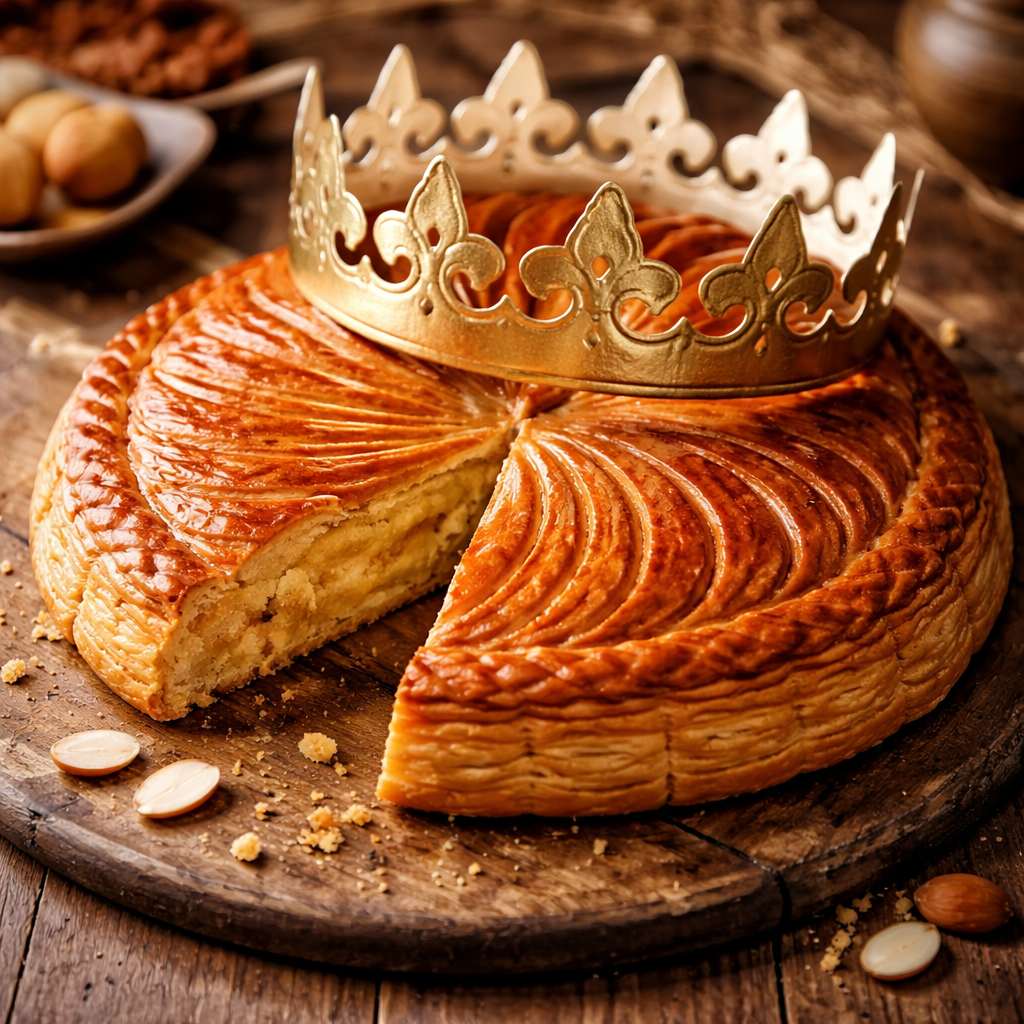
The English Twelfth Night involved electing a Lord of Misrule who would preside as King of the celebrations, overseeing games, masquerades and singing.  There would be a special cake (a tradition also echoed in Europe with the French Galette Des Rois, Spanish Roscón de Reyes or Portuguese Bolo Rei).  In this cake a bean would be baked into the batter.  Whoever’s slice of cake contained the bean became the King or Queen of the Bean and joined the Lord of Misrule in leading the night’s anarchic celebrations with a strong spirit of mischief.  In certain regions, there was a communal drinking of wassail (spiced ale or cider) and either going from house to house singing or meeting to sing together in an orchard to bless the trees and future harvest.  

Twelfth Night festivities diminished in England during the 18th and 19th Centuries as social structures became more restrained and more emphasis was placed on Christmas Day itself.  As this was an essentially Catholic Christian festivity, some Protestant churches moved away from the tradition altogether.  However, wassailing is still a tradition in cider producing areas of England. In Europe and Latin America the tradition of King Cakes is still carried out, with a bean or figurine nominating the head of the night’s festivities.

Historically, after the period of Epiphany and Twelfth Night, In Europe, a series of saints’ days continue festivities until the period of Carnevale, a pre-Lenten celebration before abstaining from rich food for 40 days.  Some of these festivities involve lighting of bonfires, bringing light back to the dark evenings.  One of these is Sant Antonio The Great whose festival in Italy lights bonfires called Farchioni which burn as big bundles of twigs.  Cakes, rich with dried fruit are also shared.

Carnevale, which typically is celebrated in late January until Shrove Tuesday, repeats some of the anarchy of Twelfth Night with mock authority figures, disguise, masquerade, singing and dancing.  Its name is thought to come from the words ‘carne levare’ as Lent would traditionally be a time of the year for giving up meat.  While possibly one of the most famous is the Venice Carnival which was particularly notorious in the 18th Century and was revived in 1979, Carnevale is celebrated in numerous countries across the world from Germany’s Fasnacht at the end of February, France’s Nice Carnival and it is also celebrated in Brazil, New Orleans and across the Caribbean.  The culmination is Shrove Tuesday which is at its most spectacular and well known as the Mardi Gras festivities in New Orleans.

There are good reasons to extend the period of festivity, cheer and fun beyond New Year’s Eve itself.  Psychologically, allowing January to be both a re-set and readjustment but also a legitimate time to allow light, fun and frivolity in one of the most difficult months of the year, makes a more positive and sustainable start to the year.  Permitting a continuation of a slightly anarchic feel before the days become longer, maintains a positivity to lessen the blow of winter until the first signs of spring begin.

And while it would certainly be crass of us to suggest that this is a time to gorge on cheese again, using Twelfth Night and Carnival to see ourselves through to springtime as the historical tradition had suggested, we can put a close to Christmas festivities and move on to celebrate the first month of the year rather than simply enduring it.